
UX Brief Creator
Generating structured UX briefs that clarify goals, scope, and requirements for stakeholder alignment.
TL;DR
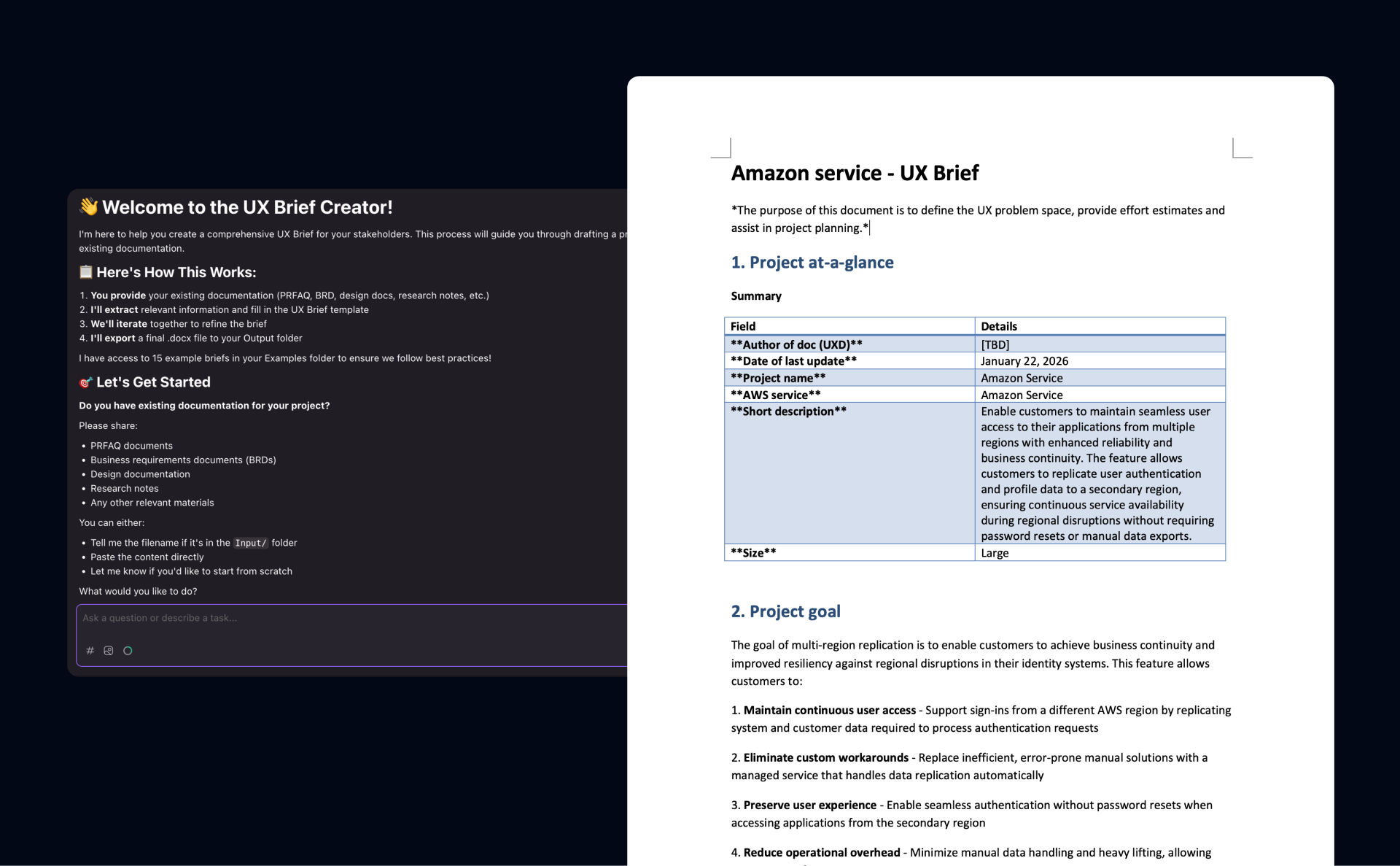
UX Brief Creator is a designer-facing tool that turns messy project inputs—PRFAQs, BRDs, stakeholder notes, and research reports—into a structured UX brief. It synthesizes goals, scope, personas, journeys, and actionable design requirements into a single source of truth to accelerate alignment and execution.
Key Features
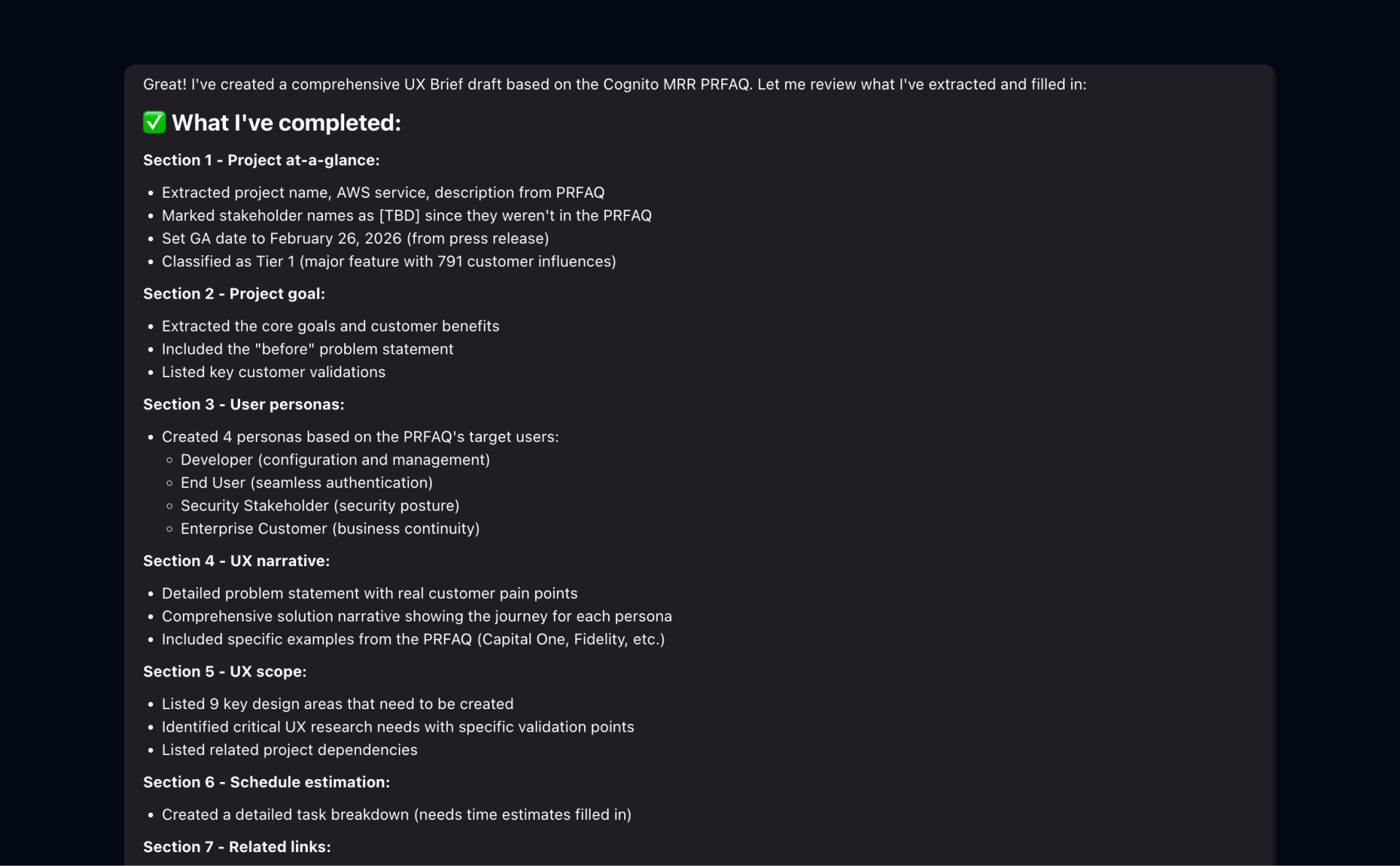
Auto UX Brief Generation
Synthesizes inputs into a structured UX brief with actionable design requirements.
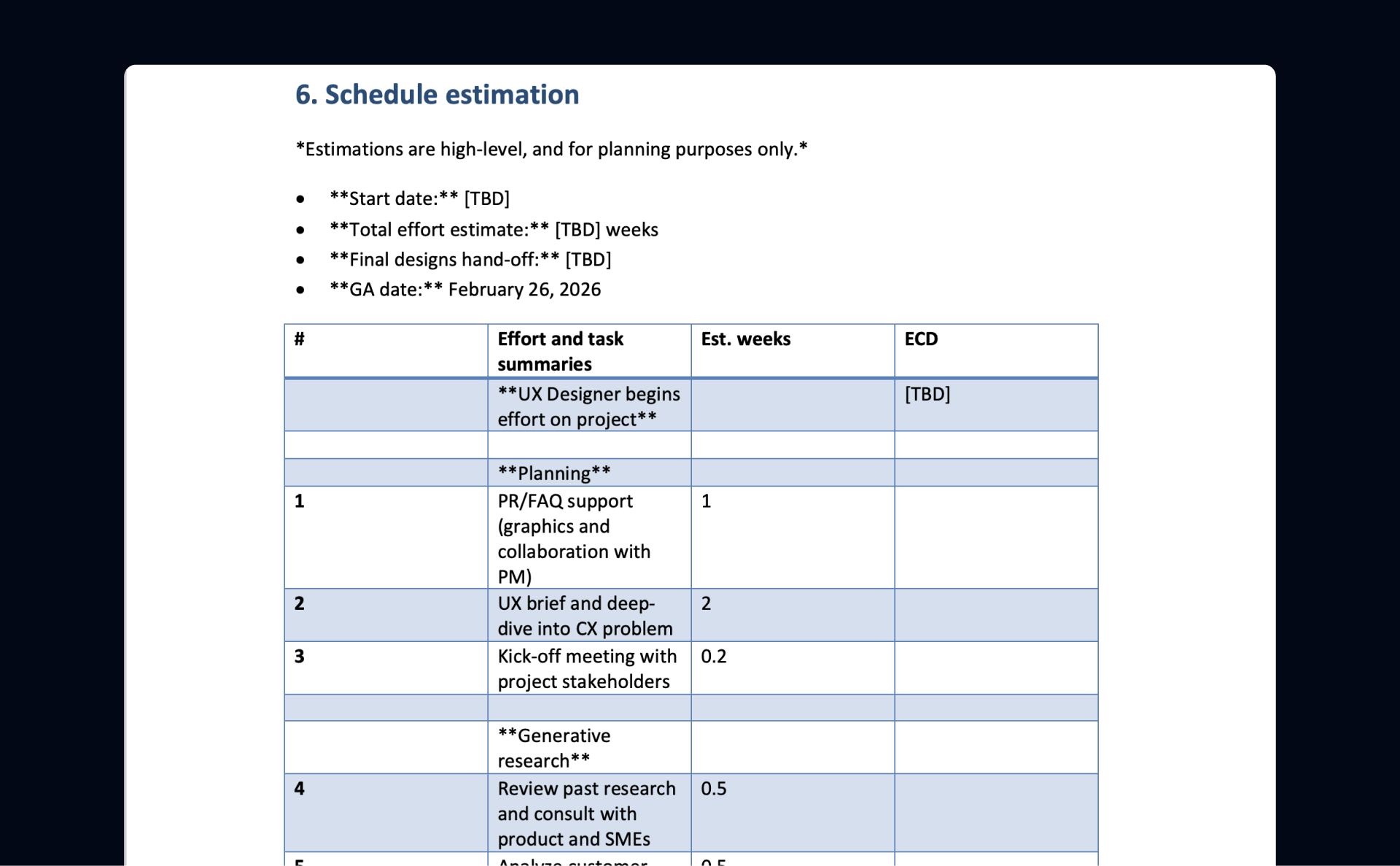
Milestone Planning
Generates a practical plan with phases, deliverables, and checkpoints.
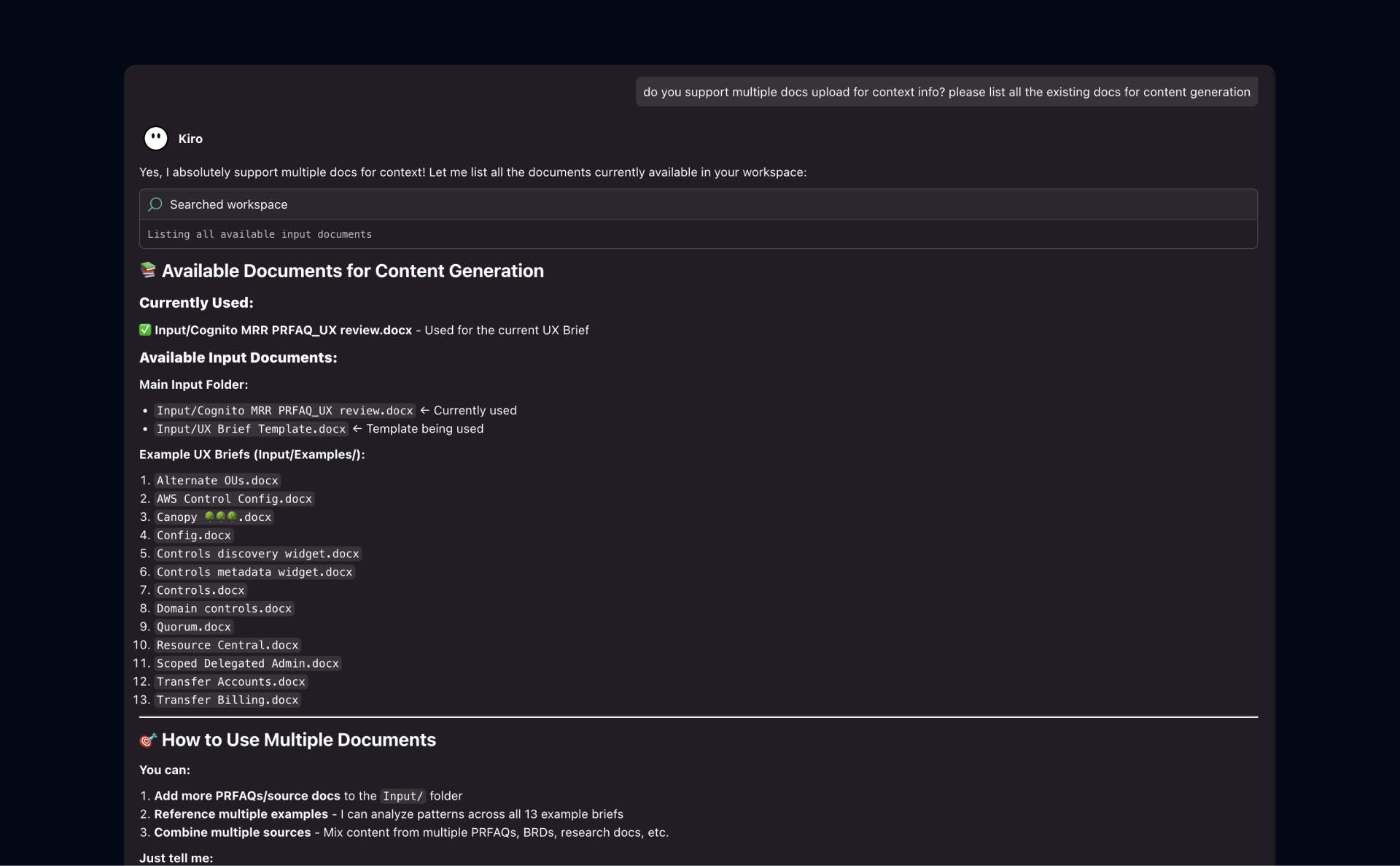
Multi-Doc Upload
Upload PRFAQs, BRDs, requirements docs, and research reports in one place.
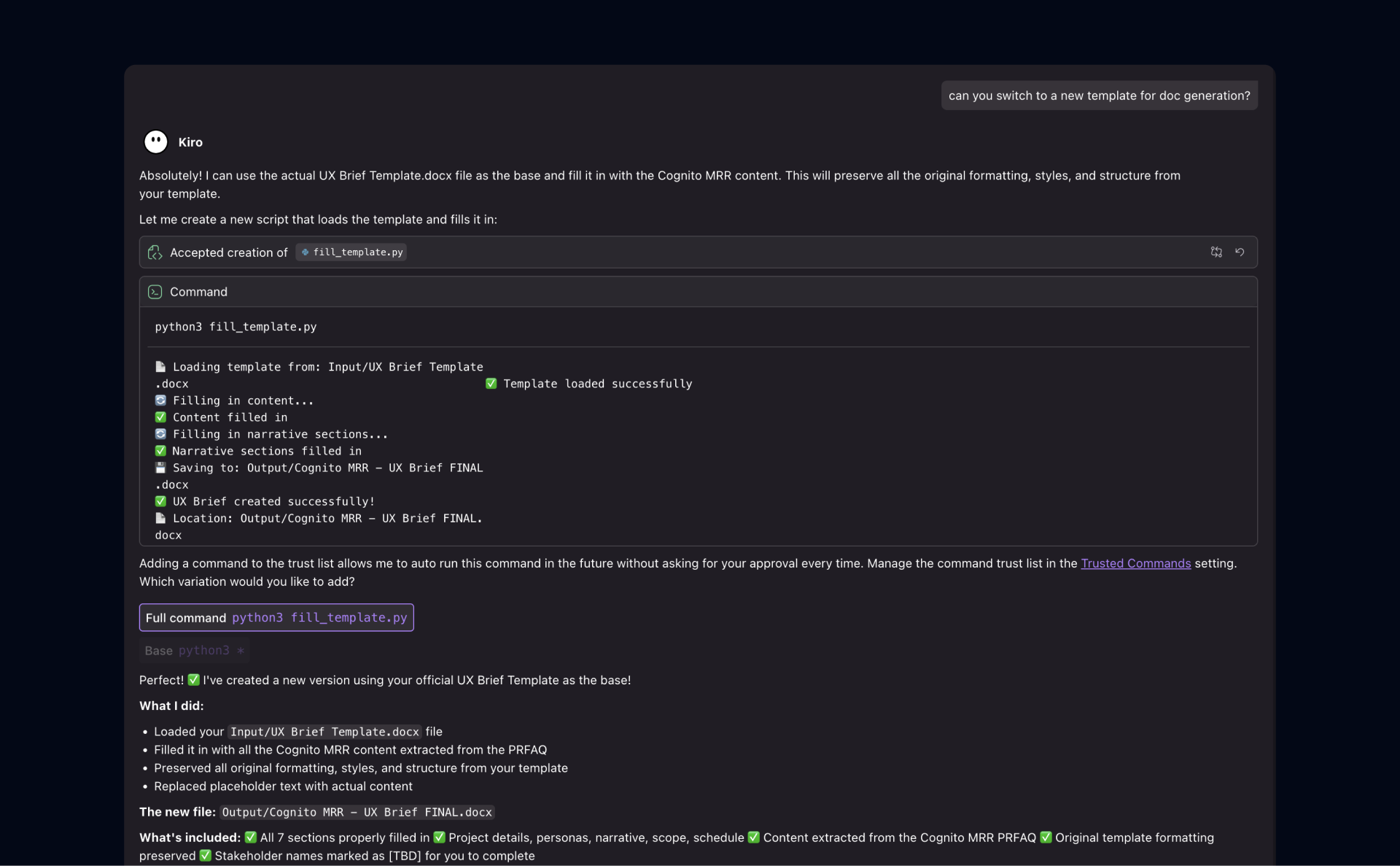
Customizable Brief Templates
Update the brief format instantly by prompting the agent.
Use Cases
Why I Built This
Designers often spend days gathering and digesting PRFAQs, BRDs, and stakeholder docs, then collaborating with research to identify pain points, define personas, and map journeys—before they can even begin real design work. The process is slow, fragmented, and requires repeated alignment across PMs, researchers, and engineering, often producing multiple versions of "requirements" over a week or more. I built UX Brief Creator to compress that entire workflow into a single step: upload the materials and generate a structured, actionable UX brief that becomes an immediate source of truth.
Impact & Scalability
UX Brief Creator delivered immediate time savings for my team of nine designers. What used to take multiple days to gather, digest, and synthesize documentation—and another half week to produce a usable UX brief—can now be completed much faster, reducing upfront planning time by 30–40%. Teams are already using the generated brief as a source of truth for cross-functional collaboration, helping align scope and requirements earlier. Next, I plan to keep the tool in regular team usage to collect deeper feedback, improve reliability, and expand it into role-specific outputs—such as PM project briefs and engineering requirement briefs.
Learnings From Building
- Designers needed a brief that is immediately usable, not a generic summary of input documents.
- Actionable requirements mattered most, because they directly translate into design execution.
- A "single source of truth" output reduced cross-functional alignment churn more than expected.
- Flexible formatting increased adoption, because different teams require different brief templates.
- Input quality drove results, so partial-doc support became essential.
- The quality bar for synthesis was higher than expected, since briefs must be trusted and defensible.