PwC Digital Lab

Digital Lab is an internal platform that empowers employees to build, share, and explore automations that could reduce their routine tasks and workloads for more meaningful works.

how we work

Years of the partnership with PwC turn us into one of their "in-house" design team. For most of the projects, I work directly with front-end devs, junior UX designers, UI designers, illustrator, UX writer, design lead, and design manager from our end. We collaborate closely with awesome players from PwC: product managers, back-end devs, and product owners. Furthermore, we partner with PwC Customer Voice team to fulfill the need for all the user research and usability testing. The quarterly roadmap and monthly sprint guide us on designing and shipping features/new products with agility and flexibility.

Shipped Projects

The content shown below has been properly modified due to confidentiality.  

Platform Gamification

Shipped in Nov, 2018

overview

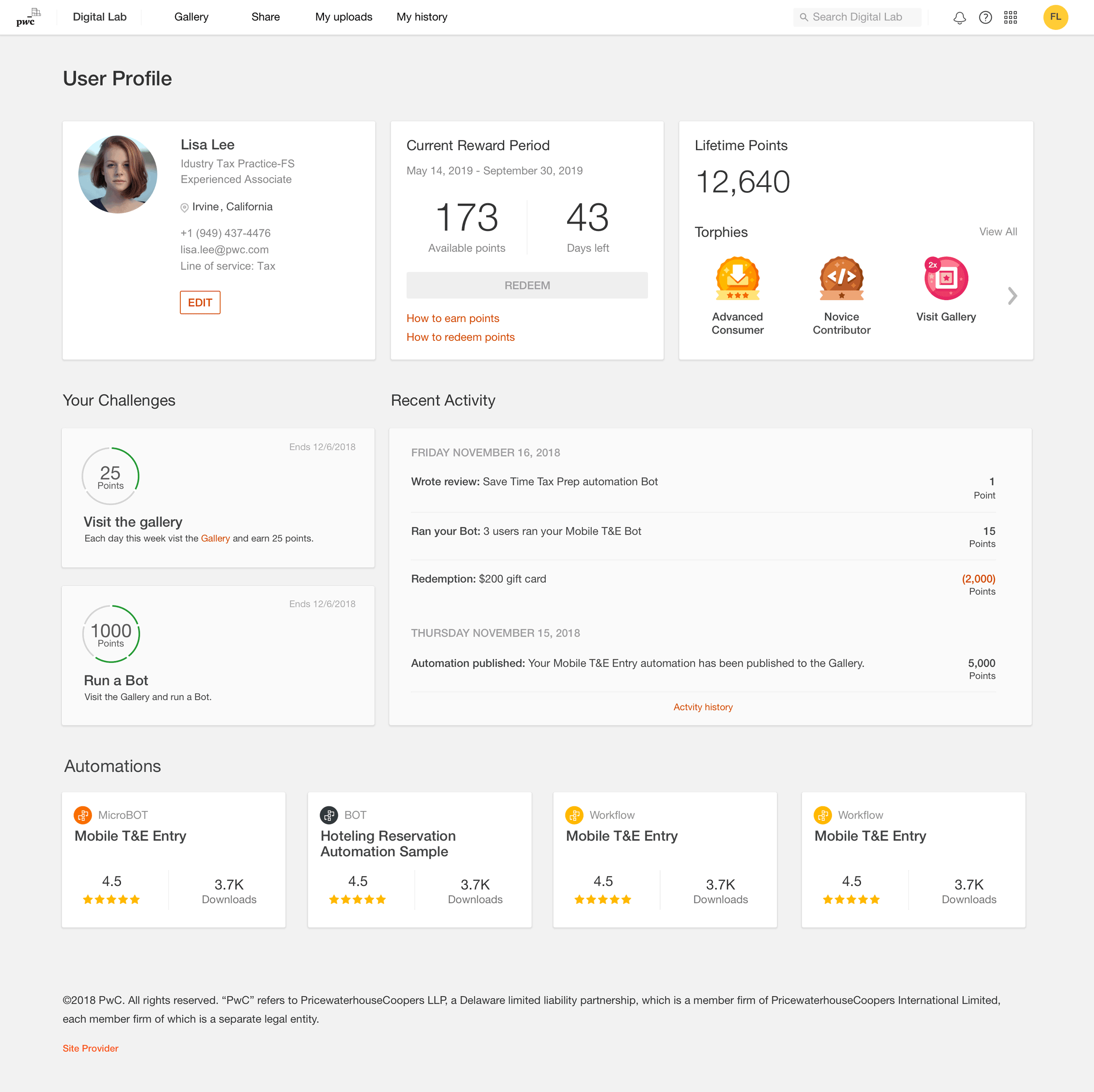
We gamified the Digital Lab with the Leaderboard, Trophy, and Reward system, to incentive more internal employees to engage and contribute their knowledge into this platform. I was responsible for the design of core flows, user experience, and interfaces to meet the business expectation.

impact

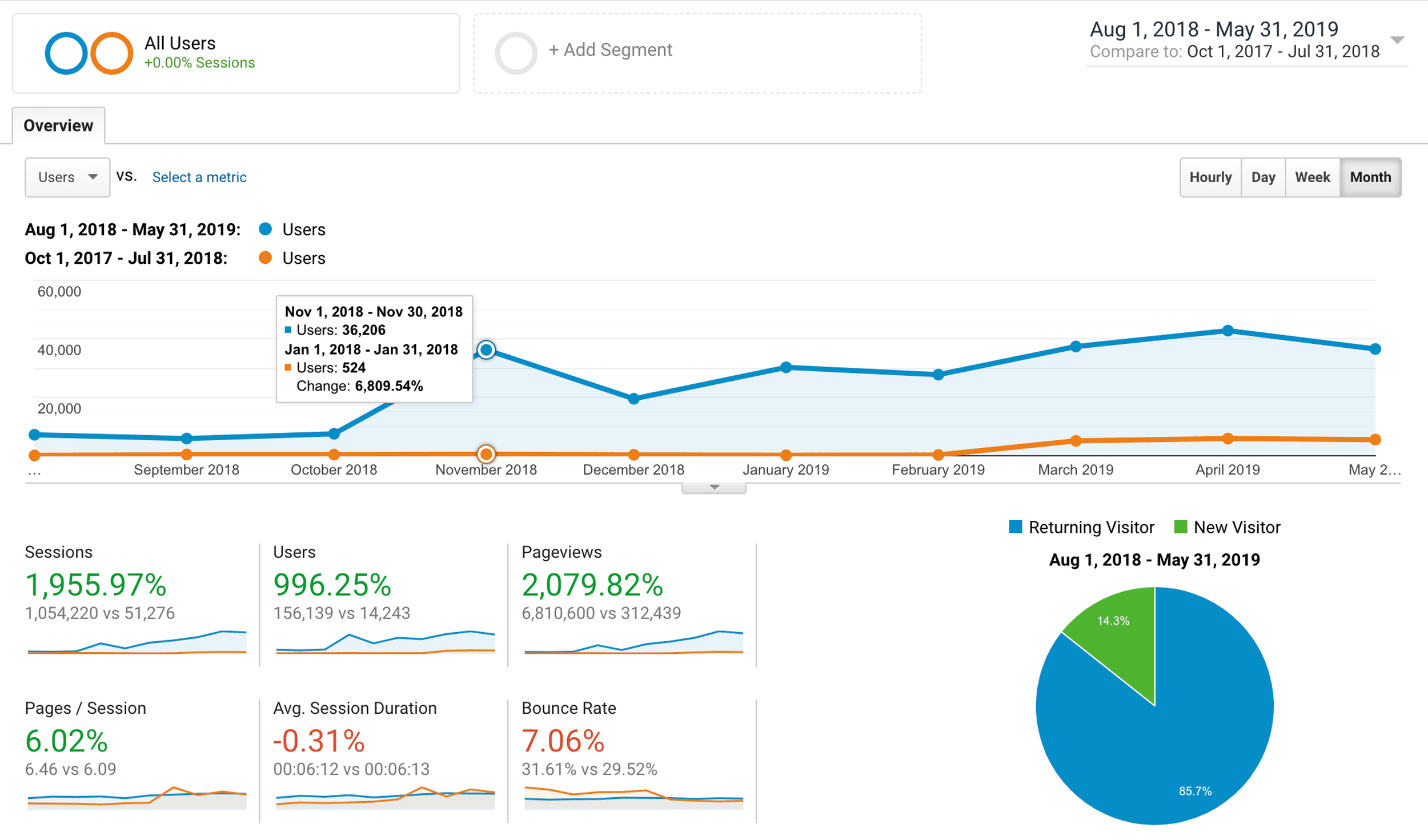
The monthly active user grew dramatically from 500 to 36K.
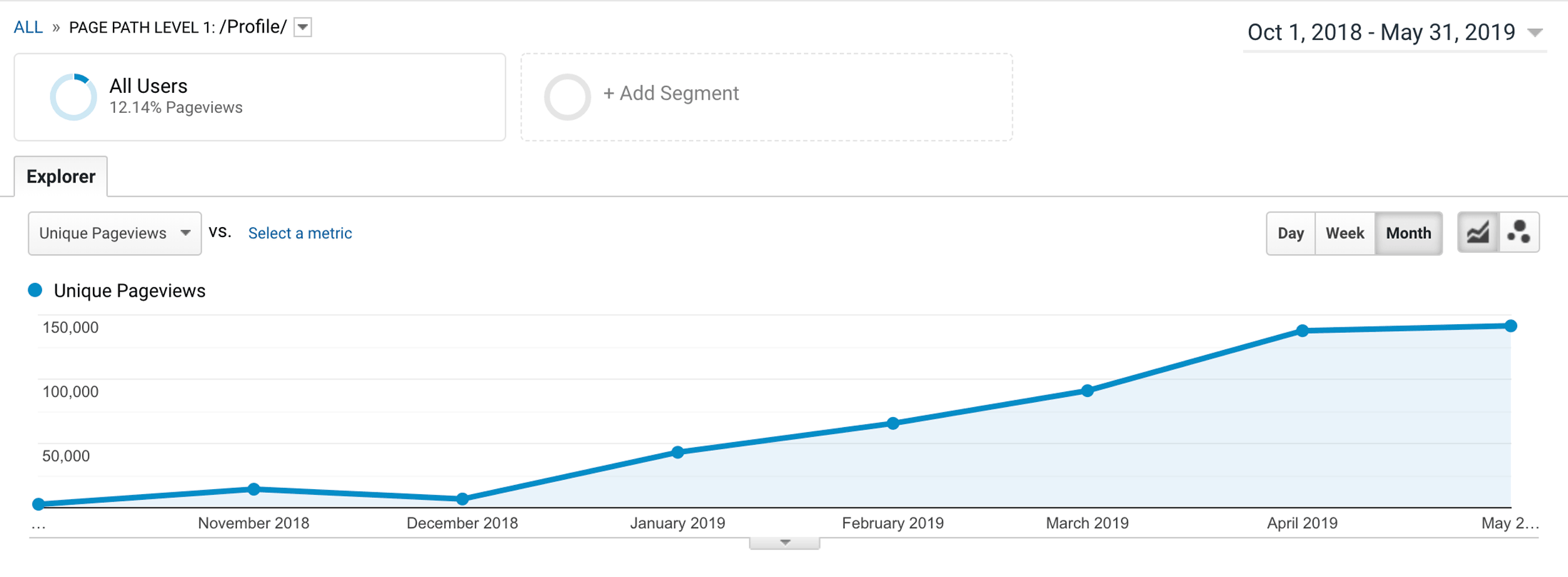
The User Profile pageviews achieved a steady monthly increase of 200%.
7/10 employees we interviewed mentioned they checked their points everyday.

Search Function Enhancement

Shipped in Mar, 2019

overview

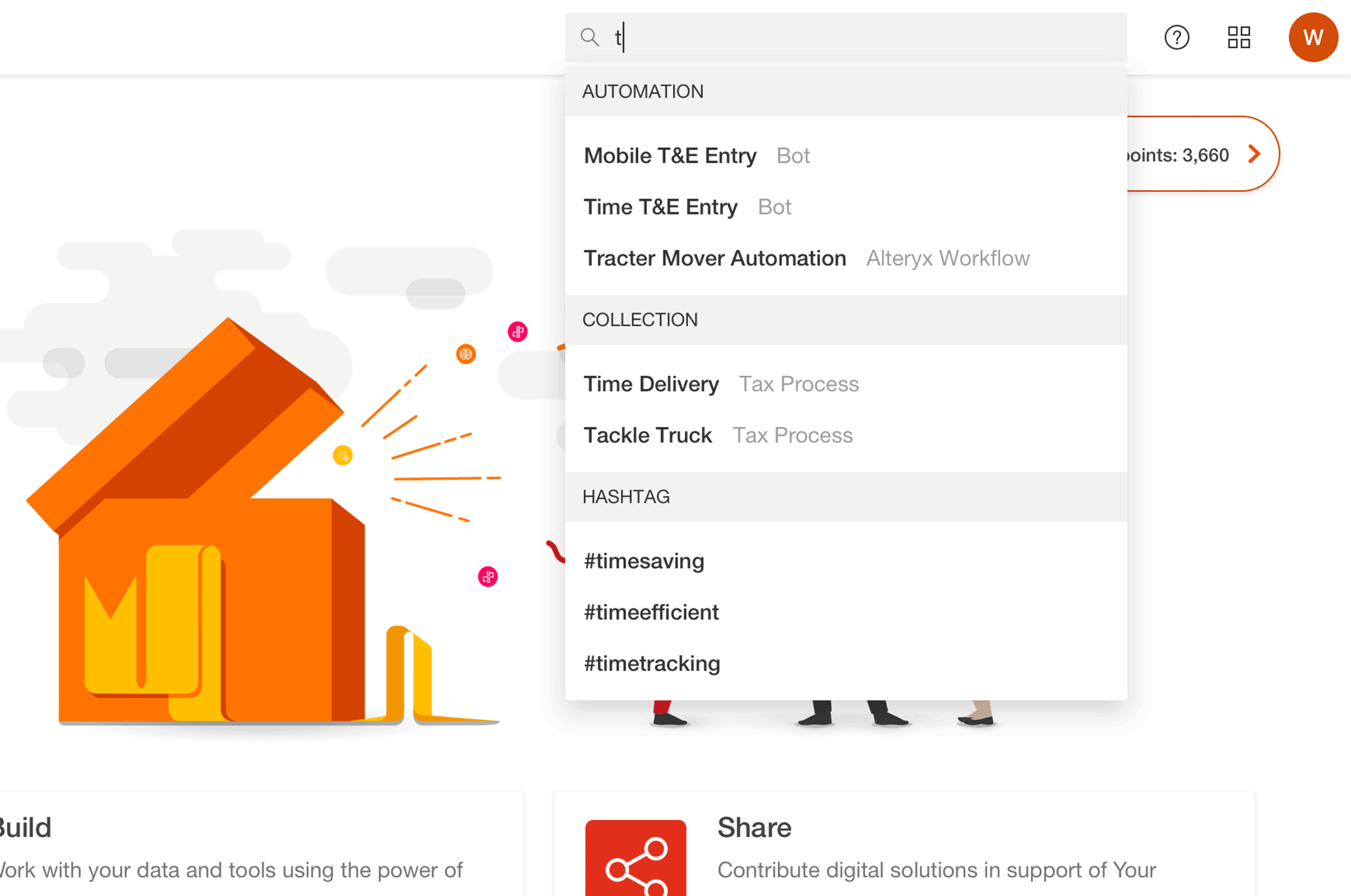
I led the design enhancement of the Search function, informed by the research insights from our Voice of Customer (VoC) report. The objective was to provide more related and useful predictions for users; from the business perspective, we’d like to understand what users are constantly looking for, so we could have more specific content curation.

impact

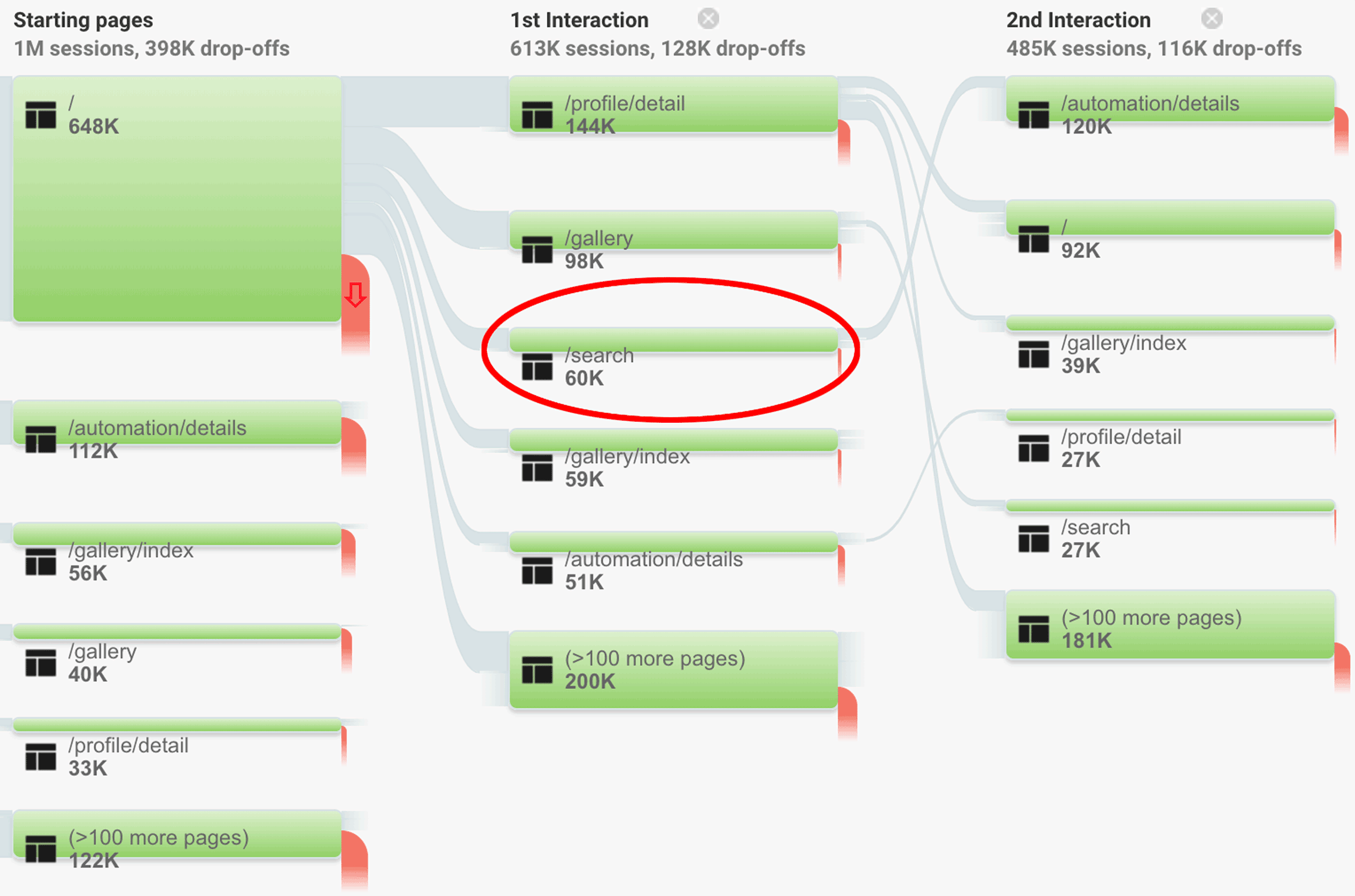
The refined Search function has become more user-friendly and intelligent in result prediction. For example, previously, you had to type “e-file” exactly to search for the results including “e-file”, instead of just typing “efile”, but now you can type in either phrase to search for it. The Search Result page ranked one of the top three most visited pages since we rolled out the enhancement.

Hashtag in Search Result

Shipped in Apr, 2019

overview

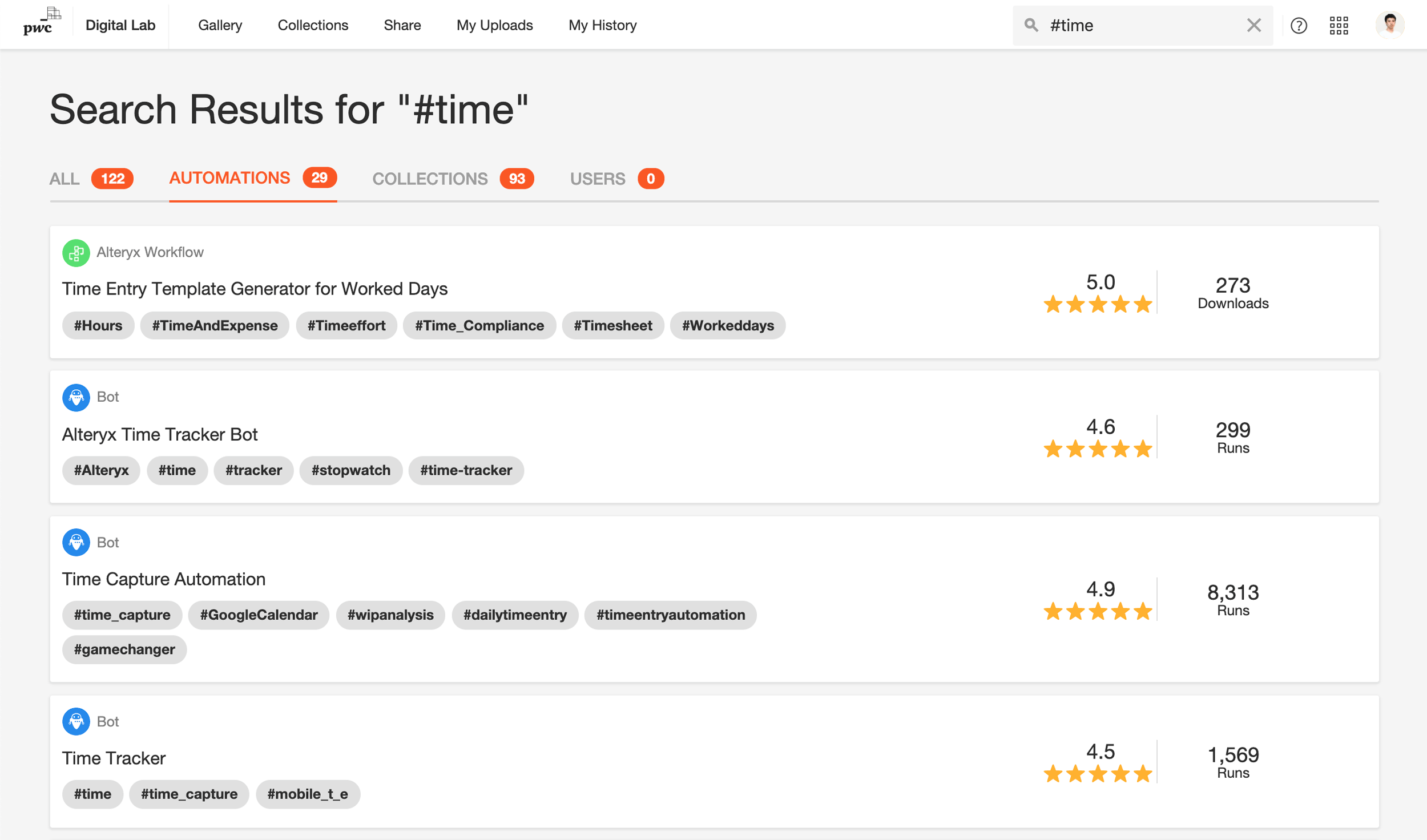
The hashtag wave not only exists in social media platforms but also in the Digital Lab. As we noticed an exponential increase in hashtag usage since its launch, it soon became inevitable for us to integrate hashtag into the overall search journey. I worked collaboratively with back-end developers and the leadership team to deliver the hashtag-searching experience onto the Search Result page.

impact

The back-end analytics shows the number of the hashtag search query increased from 750 to 13k during its first month of release.

Homepage Recommendation Section

Shipped in Jul, 2019

overview

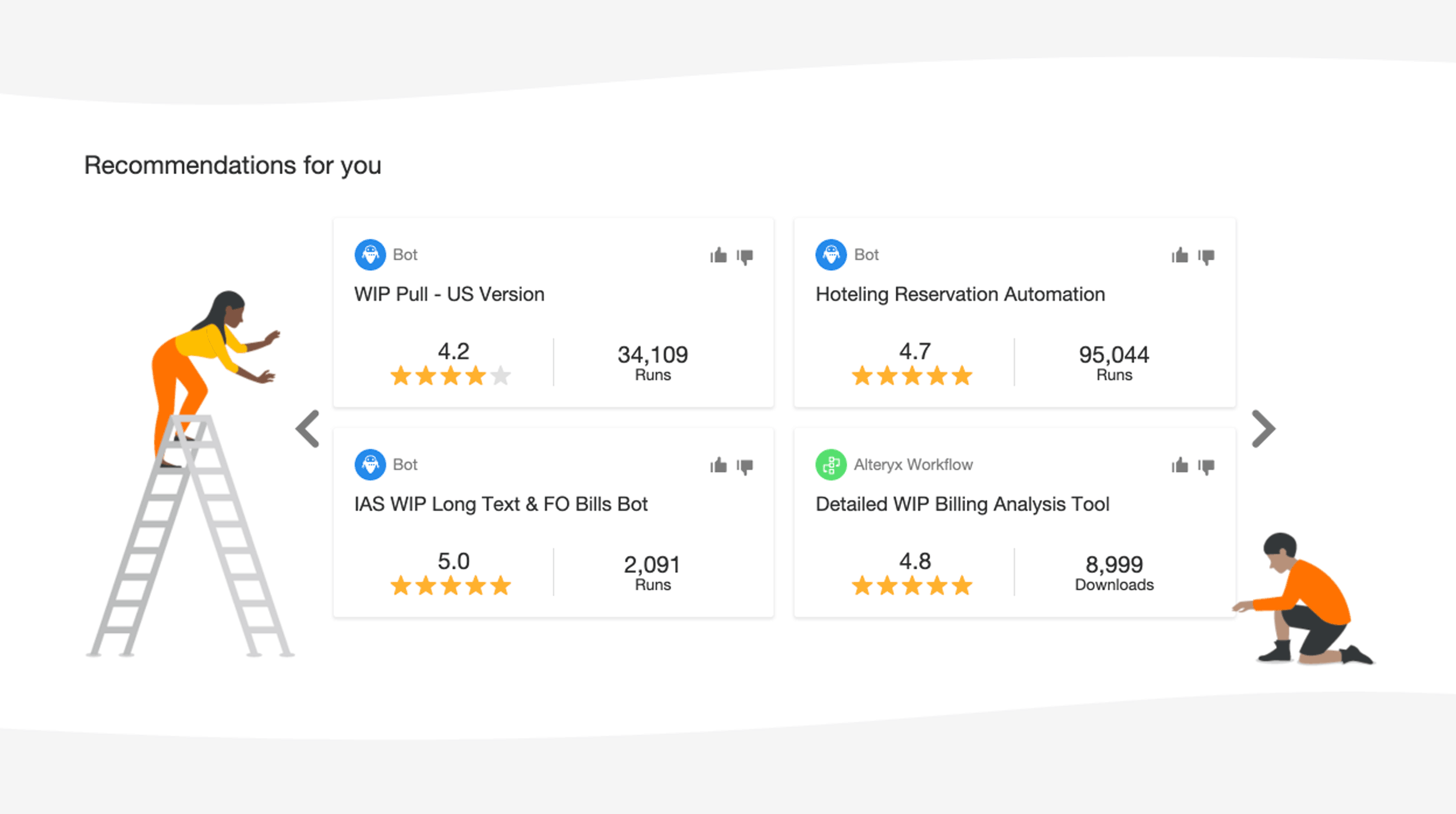
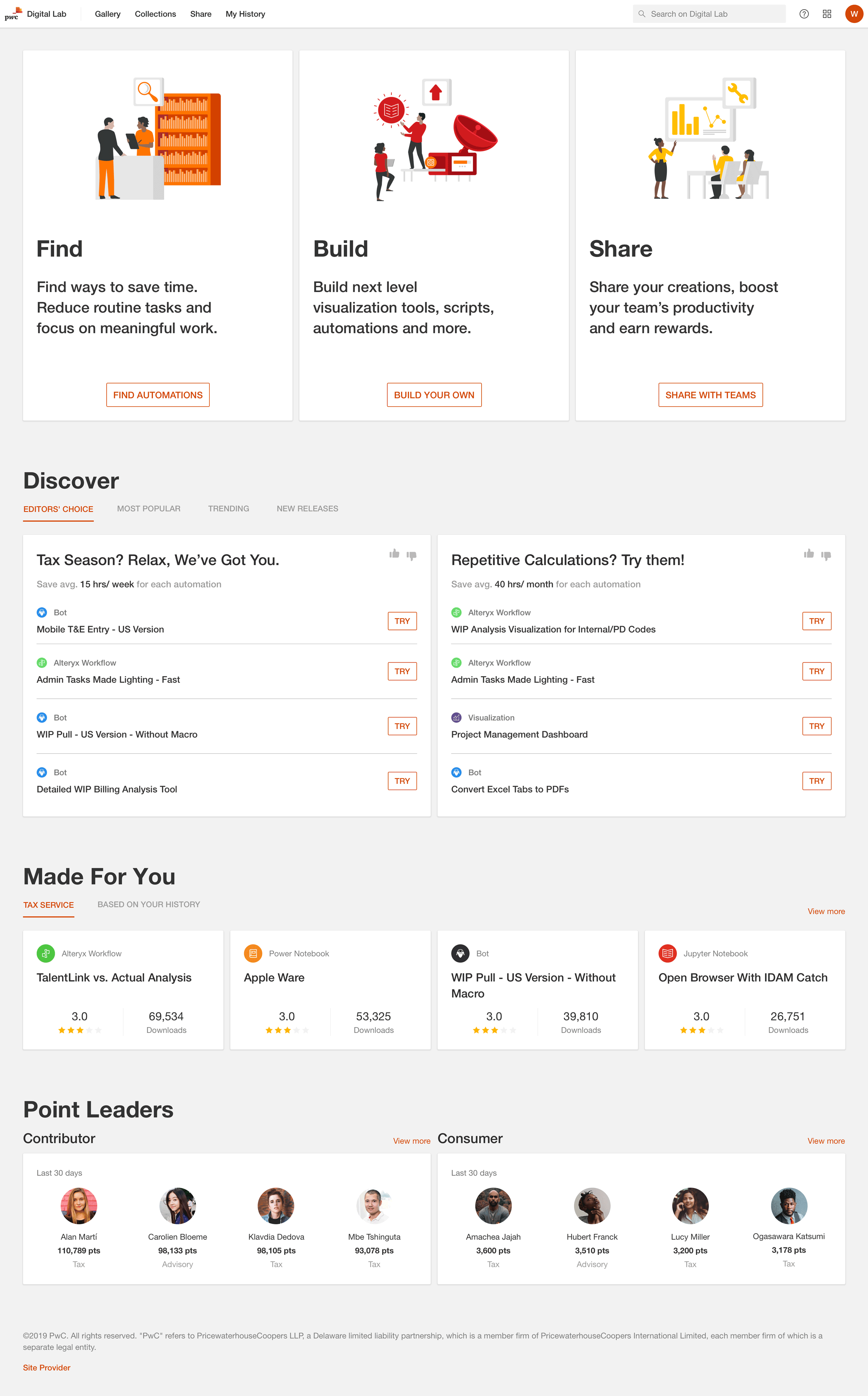
The Digital Lab content management team were looking to expose more useful automation assets to the users by using the NLP algorithm to suggest relevant automation assets according to users' roles and their browsing histories. Along with the lead designer and the illustrator, we defined the style of the Recommendation section and designed the interaction pattern for it.

impact

The content management was able to surface 16% more of the automation assets via this section. Within three months of its launch, the Recommendation section has contributed over 45K page views. 

Usability Issues Backlog

Shipped in Mar, 2019

overview

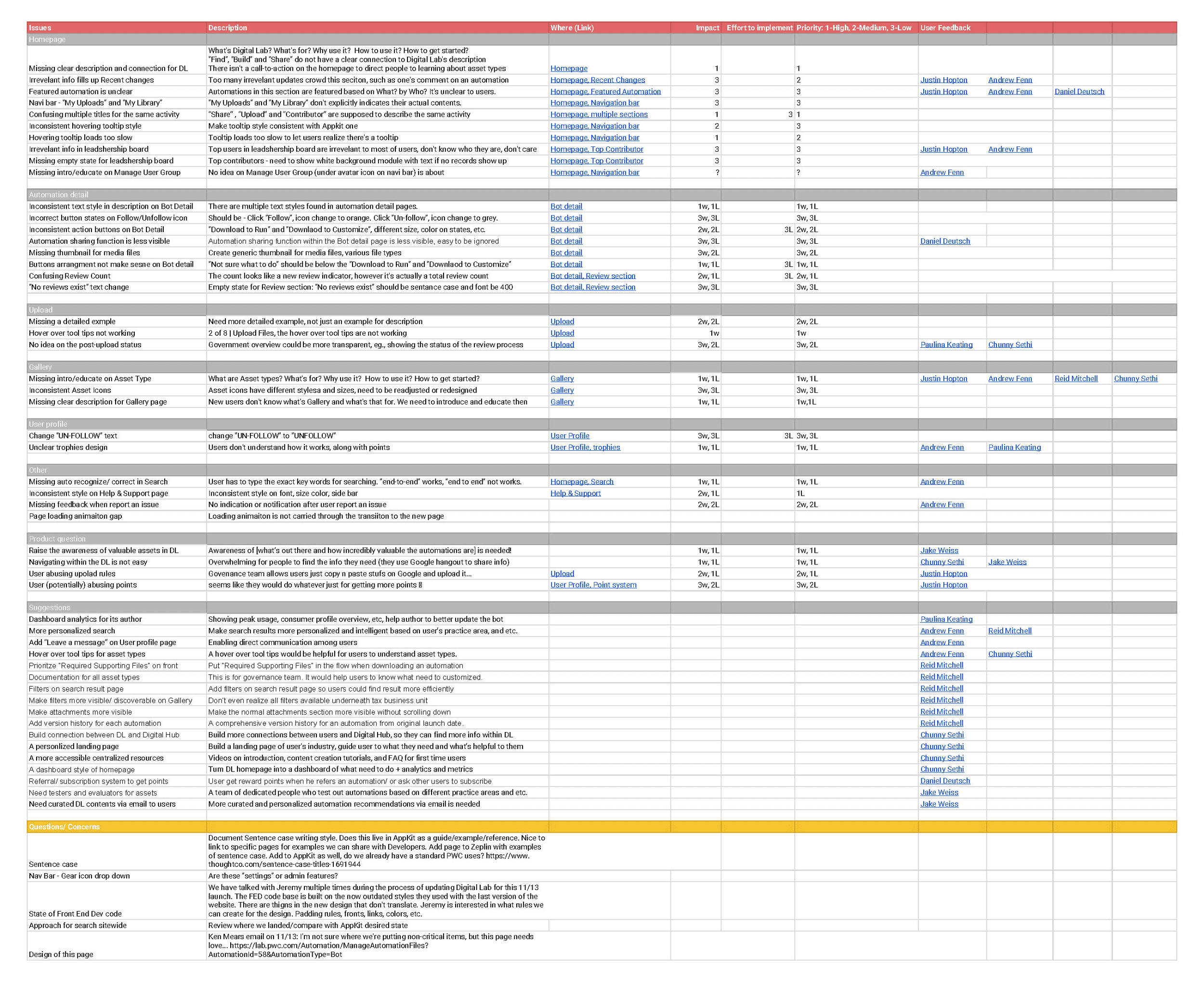
I took the initiative to create a backlog that documenting usability issues we've discovered from previous research activities, such as interviews, surveys, etc. With the help of developers and product managers, we together prioritized each usability problem based on the impact and implementation efforts to fix. We also discovered the product and business level concerns, such as user might be abusing reward points, etc.

impact

This backlog helps us ensure that some of the usability issues won't be carried onto the next foundational features and scaled to cause severe impact. It has become a document that we constantly refer back to when we consider what's next on the roadmap.

Keep Learning

1. Be inquisitive, keep digging out the reasons behind the given design requirements.

2. The importance of listening, the very best ideas can very often come from the quietest voice.

3. Granular design variations help undercover micro design constraints.

4. Keep the balance between accommodating users’ needs vs. overpopulating the interface that might distract users from their tasks.
5. Shift mindset between product thinking and design thinking, to avoid when you have a hammer, everything looks like a nail.

6. No perfect solution ever. Question every design decision until the handoff: is there a better one?

7. Meet client's requirement is level 1, but successfully sell your ideas is level 2.

8. Mentoring others is not only about sharing knowledge but also repetitively learning.